Women’s Legal Resource Centre (Wolrec) has launched a Gender Observatory and Tracker to monitor Malawi’s progress on gender equality in a drive hailed as a vital tool for accountability and policy reform.
The platform, supported by the UK Government through the Foreign, Commonwealth and Development Office (FCDO), will serve as a hub for data, analysis and evidence-based reporting on gender-related issues.
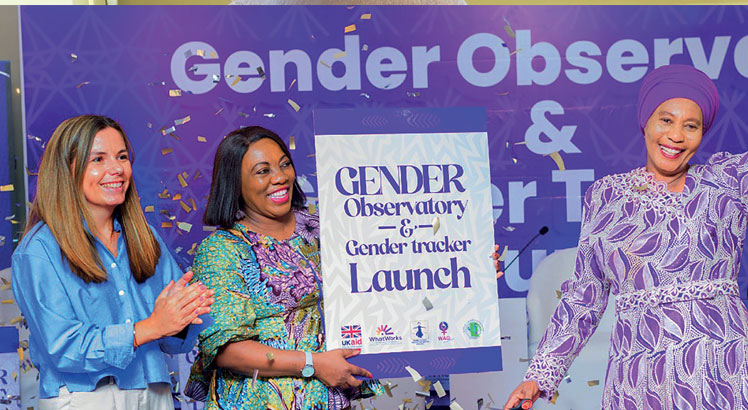
It will also track commitments under the Women’s Manifesto and provide policymakers with reliable information to address persistent inequalities.
Speaking during the launch in Lilongwe yesterday, Deputy Minister of Gender, Community Development and Social Welfare Halima Daud said Malawi still faces serious gender disparities despite progress made in the last decade.
“The country ranks 172 out of 188 on the Gender Inequality Index, reflecting high levels of inequality in reproductive health, women’s empowerment and economic participation,” she said. “Women hold only 39 parliamentary seats, representing 20.2 percent while violence against women and harmful cultural practices continue to undermine rights.”
She described the tracker as a critical step towards ensuring accountability on government and civil society commitments to gender equality.
Wolrec executive director Maggie Kathewera-Banda said the Women’s Manifesto, now in its second edition, provides the basis for monitoring progress, as it captures the demands and priorities of Malawian women across different sectors.
“This is an independent, inclusive and participatory platform designed to track, document and report on the progress made in implementing the commitments of the Women’s Manifesto,” she said.
Acting British High Commissioner Natalie Mitchell-Bennett said data-driven accountability was essential to transforming women’s lives.
“By tracking progress, identifying gaps and amplifying women’s voices, the Gender Observatory will help ensure that no woman or girl is left behind,” she said.
The platform’s first assessments will align with Wolrec’s thematic areas under the Women’s Manifesto, covering political inclusion, economic participation, health, education and protection from violence.
Stakeholders say the tool will provide civil society, government and development partners with a clearer picture of where Malawi is succeeding and where more work is needed to achieve gender equality.